

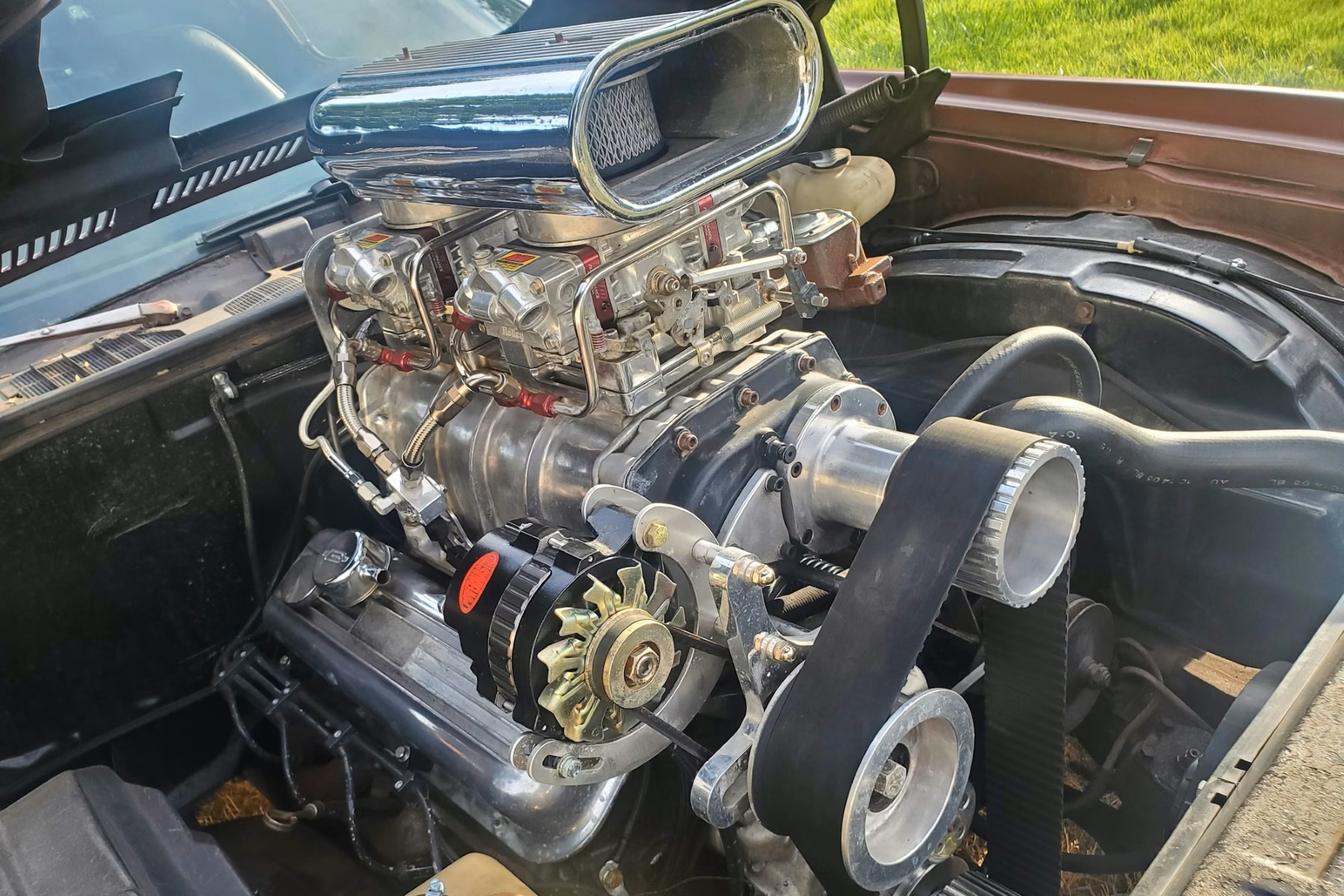
You have to pay to play in the world of horsepower, and anyone who chases big numbers knows there’s no shortage of ways to spend money under the hood. But some paths to more power simply make more sense depending on your goals, whether you’re working within a tight budget, juggling limited engine-bay real estate, or navigating the specific rules of your racing class. The internal combustion engine is simply an air pump, so the more air you can get into the combustion chamber, the better its performance. There are a lot of options when moving past naturally aspirated engines, so we are going to break down the power adders that are fan favorites for both street cars and race cars alike.
All About The “Giggle-Gas”
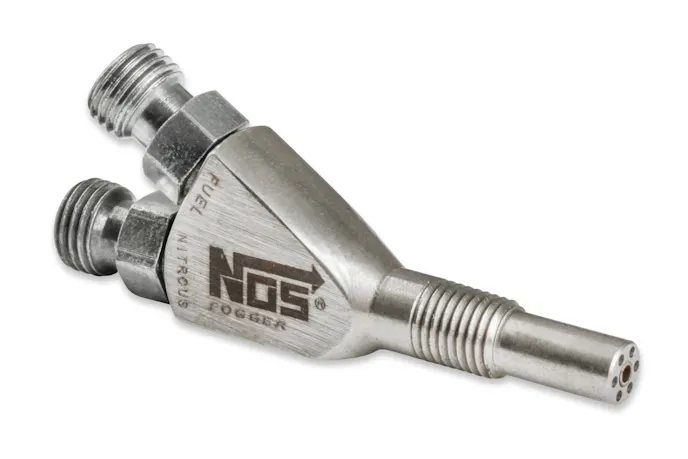
Nitrous oxide is one of the oldest and most proven power adders in both drag racing and street performance. You can trace its roots back to fighter planes in World War II, and it offers an affordable and highly effective way to squeeze more horsepower out of nearly any internal combustion engine. Its function is straightforward: an engine can only ingest so much air and fuel on its own, and when you want to surpass the limits of natural aspiration, you need either forced induction or chemical induction. Nitrous falls into the chemical-induction category, increasing the oxygen available during combustion without raising manifold pressure. This makes it an attractive option for builds where simplicity, packaging, or cost are major considerations.
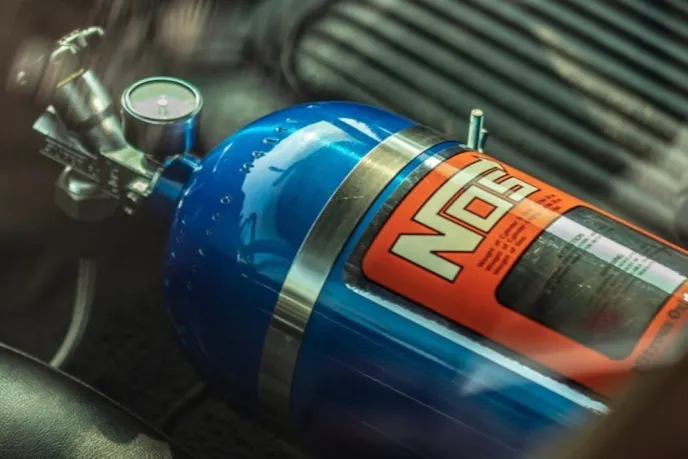
Chemically, nitrous oxide consists of two nitrogen atoms bonded to one oxygen atom, and by weight, it’s roughly 36 percent oxygen. It’s stored as a liquid under high pressure and stays in that state until it’s released into the intake tract. Nitrous flashes from liquid to gas at about 129 degrees Fahrenheit, rapidly dropping intake temperatures, creating a denser, more oxygen-rich charge. Inside the combustion chamber, the compound undergoes a second transformation around 570°F, breaking apart and freeing the oxygen molecule. That extra oxygen supports the combustion of additional fuel, and the result is a substantial increase in power with the flip of a switch.
Dry Shot Vs. Wet Shot
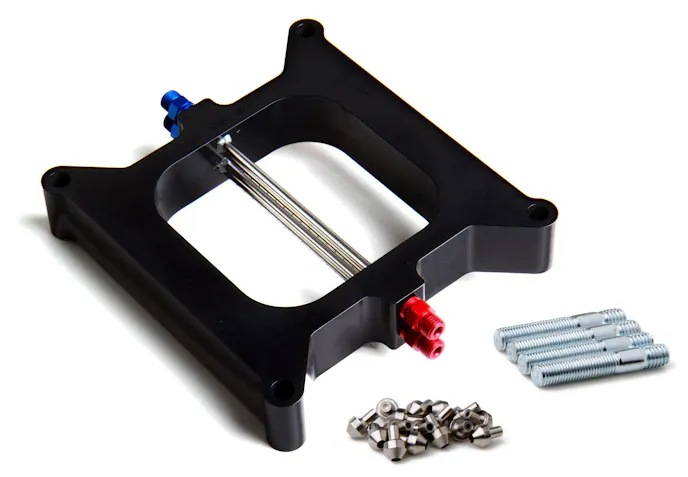
Dry nitrous systems are the most straightforward style of nitrous kit, delivering only nitrous oxide into the intake while leaving the added fuel to be handled separately through special carburetor tuning or ECM tuning on EFI applications. Wet systems take a different approach by introducing both nitrous and fuel together through the same nozzle or plate. Because the nitrous-to-fuel ratio is controlled within the kit itself, a wet setup offers more tuning flexibility and reduces the need to alter how the engine meters fuel when the system is not in use. This is why most popular configurations, like a single-nozzle, carb plates, or direct-port kits, are designed as wet systems.
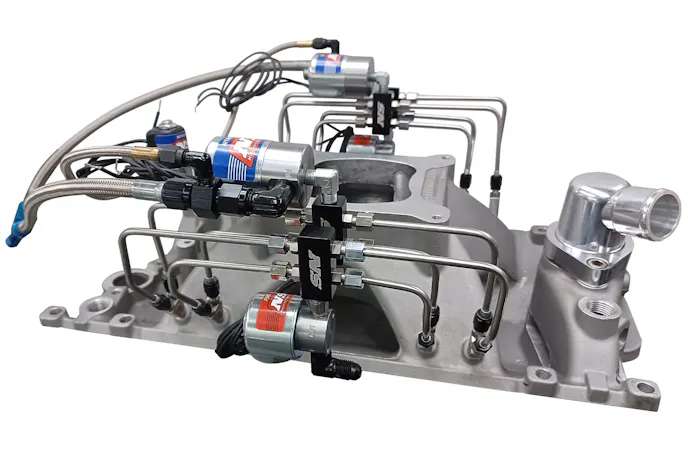
With either style, adding nitrous introduces more oxygen into the combustion chamber, which in turn requires more fuel and raises cylinder pressure. That increase creates power, but it also speeds up combustion, making proper ignition timing critical. To keep everything safe, timing must be retarded when the nitrous is active so peak pressure occurs at the right point in the cycle. For most modern EFI builds, this requires a standalone ECU that can pull timing on command, such as Holley or Haltech systems.
Late-model LS and LT platforms have a unique advantage: they can use an aftermarket timing-control box, like one from Lingenfelter, with the stock ECM to automatically pull timing whenever the nitrous system is armed. Older or carbureted setups typically utilize ignition modules like an MSD box to handle timing retard. No matter the platform, the goal is to manage timing correctly so the extra oxygen and fuel translate into clean, reliable horsepower.
The low cost of entry and simplicity of installation pique the interest of many hot rodders, but this power adder doesn’t come without some drawbacks. Firstly, the bottle isn’t bottomless and needs to be refilled after so many uses, just like your gas tank. But nitrous oxide isn’t available at every street corner, and after several uses, the cost can add up quickly.
Also, since the amount of power is dependent on the bottle pressure, and that pressure slowly drops with every use, the amount of power delivered can be inconsistent and potentially damaging to your engine.
Lastly, the power delivery with nitrous oxide is instant, which can be hard on rotating assembly components like pistons, rods, and bearings. Most domestic V8s can safely handle a 100-shot or less without much issue with a properly installed and tuned system, but the risk of damage increases as the desire for more power grows without beefing up the guts.
Crankshaft-Driven Air Compressors
Outside of chemical power adders like nitrous oxide, superchargers are a very common and popular form of air compressor to force more air into an engine. You can find supercharger systems available from the aftermarket for carbureted and modern EFI engines, and they are still a popular option for auto manufacturers looking for a simple and reliable system to add power to performance models like the ZL1 Camaro and C6 and C7 Corvettes. Similar to nitrous oxide, superchargers can trace their beginnings to over a century ago, when they were used to ventilate coal mines and feed blast furnaces. As early auto and aircraft manufacturers looked to add power to their engines, the technology was adopted by engine builders.
Superchargers are belt-driven off the crankshaft like the rest of your engine’s accessory drive, which keeps the engine bay clean and tidy. Superchargers are also relatively low-maintenance and only need oil changes every so many years to keep alive and performing properly. These traits lead to their reputation as an easy-to-install and maintain power adder.
The OG: Roots Blowers
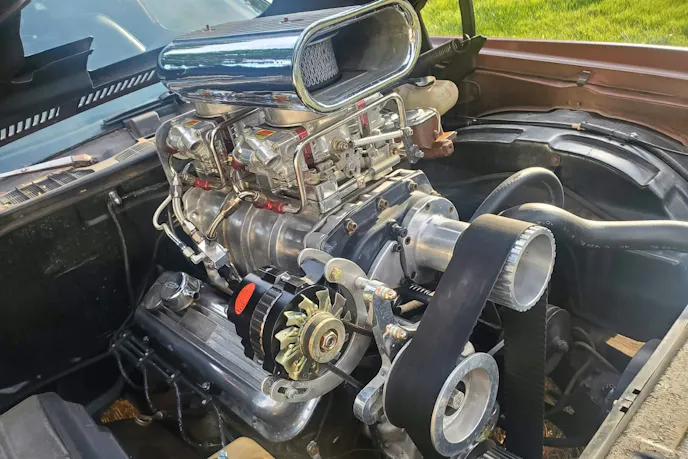
Roots-style superchargers are one of the oldest and most recognizable power adders on the market, known for moving a fixed volume of air with every revolution, which is why they are also referred to as positive displacement superchargers. For many enthusiasts, the phrase “Roots blower” brings to mind an old-school 8-71 poking through the hood of a big-block Chevelle at the drag strip. That iconic look helped cement the roots design as a staple in hot-rodding, thanks to its instant response and torque, not to mention the unmistakable presence.
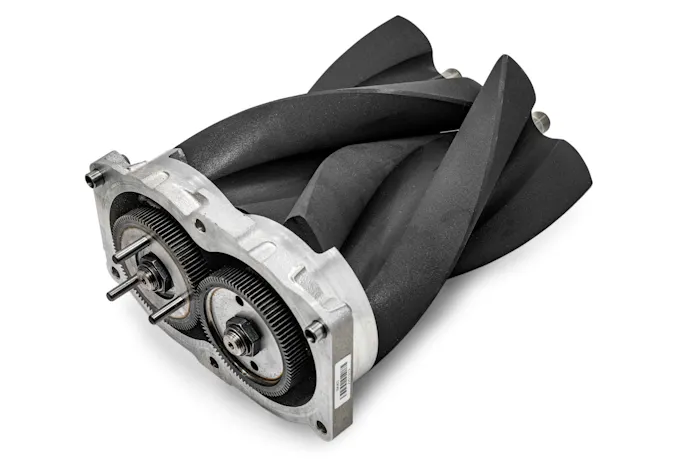
While the classic setups are still celebrated, modern Roots-style superchargers have evolved into compact units with improved efficiency used across both OEM platforms and aftermarket supercharger kits. Eaton’s TVS design is a prime example, found on factory-supercharged engines like the LSA in the Camaro ZL1 and the LT4 powering the CT5-V Blackwing. Aftermarket companies such as Harrop and Magnuson also offer advanced roots-based kits that provide strong low-end torque, excellent drivability, and the same punchy feel that made these blowers legendary in the first place.
Twin-Screw Superchargers
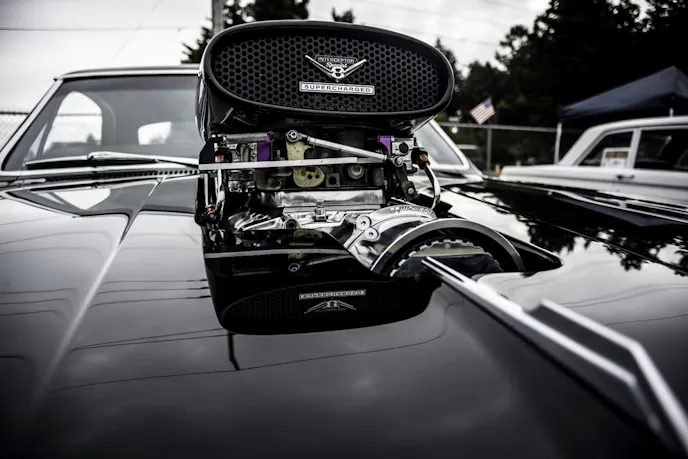
A twin-screw supercharger is often mistaken for a Roots blower, but the two differ significantly. While both use a pair of intermeshing rotors, the twin-screw’s tighter, screw-like rotor profiles and aggressive lobe angles give it a very different job inside the case. Instead of simply moving air into the intake manifold like a roots-style unit, a twin-screw supercharger compresses the air internally before it ever reaches the intake runners. That internal compression process is the key to its superior efficiency, as it reduces heat buildup, requires less effort to spin, and delivers a denser charge of air with each revolution.
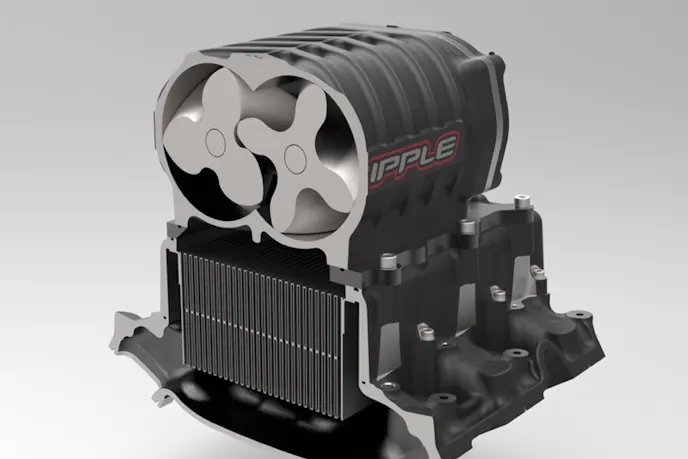
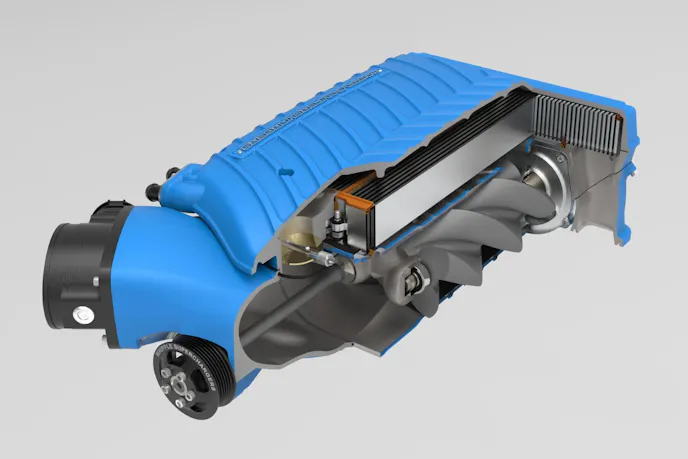
Because of this efficiency advantage, twin-screw systems are known for producing instant torque like a roots blower while carrying that power advantage well into higher RPMs. They also help maintain cooler intake air temperatures compared to Roots blowers, a crucial benefit for anyone trying to keep power consistent over long pulls or repeated passes. This blend of efficiency, power potential, and immediate response is why modern muscle car builders and competitive racers often turn to aftermarket twin-screw kits like offerings from companies like Whipple when aiming to push comfortably beyond the 1,000-horsepower threshold without sacrificing drivability or reliability.
Centrifugal Superchargers
Some may think that centrifugal superchargers are a recent innovation in the world of power adders for the performance aftermarket, but they can also trace their roots back over 100 years, like nitrous oxide and roots blowers. While their popularity has surged in recent decades, especially in the street and strip world, the core technology has been around far longer than many enthusiasts realize.
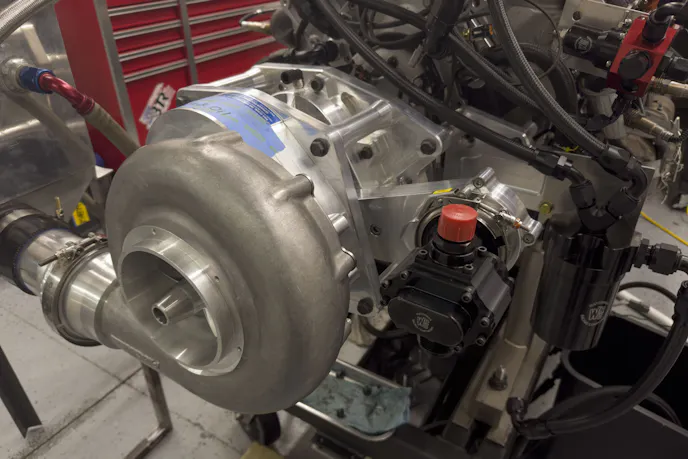
Visually, a centrifugal supercharger looks like the mechanical hybrid of a turbocharger and a belt-driven blower, and that comparison isn’t far off. Unlike Roots and twin-screw superchargers that use two rotors in a housing mounted on top of the engine, centrifugal units rely on a compressor system similar to what you’d find in a turbo. Instead of force-feeding air via displacement, they accelerate air through an impeller spinning at extremely high speeds to generate boost.
The heart of the centrifugal system is the compressor housing, often referred to as the collector. Its snail-shaped design gathers the immense airflow leaving the impeller and channels it into the intake tract. The impeller itself is a precisely engineered, high-RPM component responsible for drawing air in and compressing it. Because it operates under intense heat and stress, the impeller must be manufactured from materials capable of surviving sustained high-speed operation without distortion or failure.
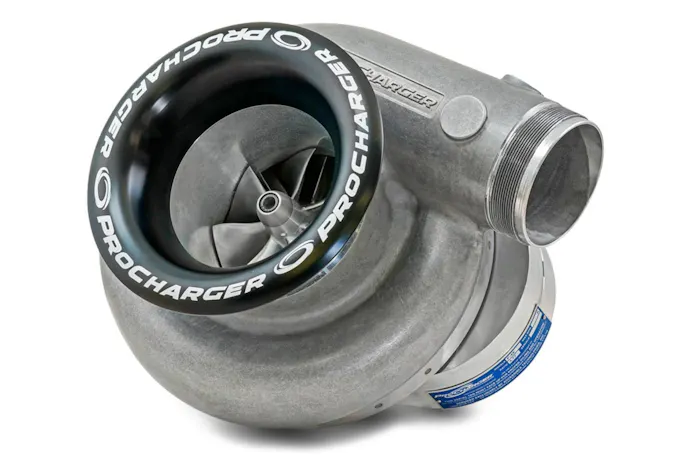
Driving that impeller requires serious RPM multiplication, which is why centrifugal superchargers use a gear-driven transmission. This internal step-up gearbox takes the relatively modest speed of the crankshaft pulley and multiplies it drastically, allowing the impeller to reach efficiency ranges between 60,000 and 70,000 rpm on typical street systems. That insane rotational speed is what enables a centrifugal unit to create a substantial boost despite relying on belt-driven power.
One of the biggest advantages of the centrifugal design is its flexible packaging. Because the head unit mounts much like an accessory drive component rather than replacing the intake manifold, installation is often simpler and more space-friendly. This is why vehicles with tight engine bays and low hood clearance, such as modern Corvettes, frequently lean toward this setup instead of traditional Rroots or twin-screw blowers.
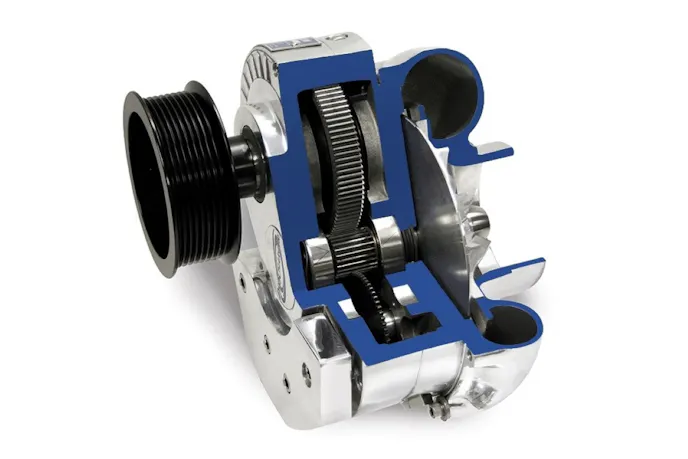
The one downside to a centrifugal supercharger as a power adder is the lack of low-end punch compared to a roots or twin-screw blower. This is a side effect of its need to be spun to higher RPMs to reach its efficiency range, which provides you with a linear power delivery versus an instant one. But this can be used to your advantage, as that power band can lead to more consistent runs down the dragstrip, and the ability to utilize something like ProCharger’s larger head units can even provide enough boost and airflow to make up to 4,000 horsepower in racing applications.
Turbochargers
It might come as a surprise that a turbocharger is actually a form of a supercharger. “Supercharger” is the generic term for an air compressor used to increase the pressure or density of air entering an engine, providing more oxygen with which to burn fuel. A turbocharger is an exhaust-driven supercharger, versus the belt-driven superchargers we all know.
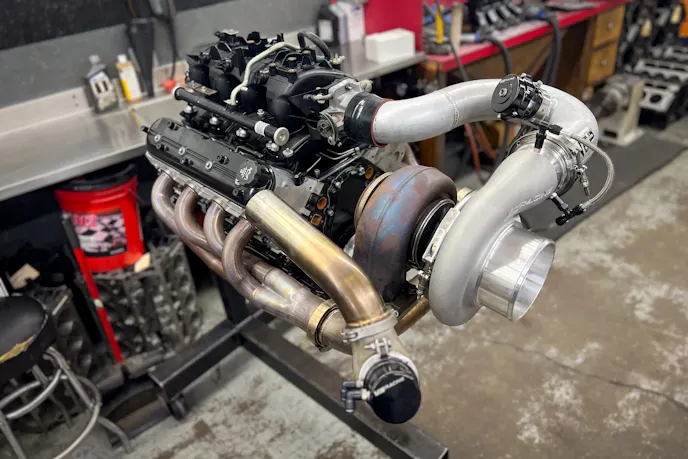
A turbocharger can be divided into three main sub-assemblies: the compressor, the turbine, and the center section. The compressor is on the intake side, which draws in air and compresses it. The turbine side is on the exhaust side, which takes exhaust gas pressure and converts it into rotational energy to spin the compressor. The center section is what keeps these two sides separated and sealed from each other while housing the shaft on oil-fed bearings or bushings.
Since the turbo does not require the crankshaft to drive the impeller, this system does not suffer parasitic loss like a belt-driven supercharger. This means that a turbo can also achieve eye-watering impeller speeds compared to a centrifugal supercharger, with speeds reaching over 250,000 rpm. It’s no wonder that Chevrolet chose to move from Roots blowers to turbos to achieve over 1,000 horsepower in the C8 ZR1.
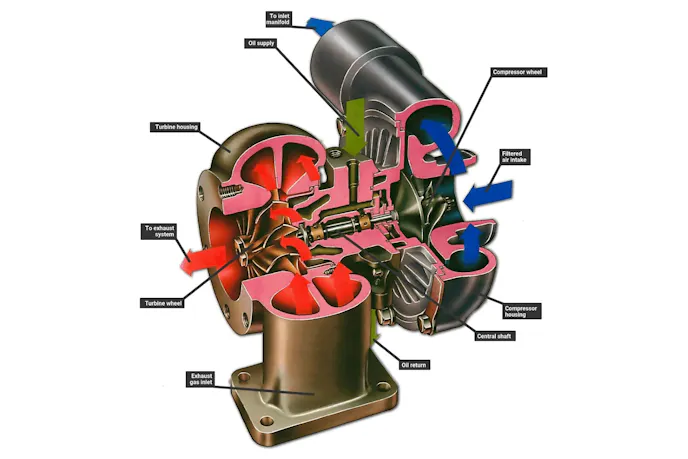
With the turbo not relying on the engine to drive it, you need a way to regulate boost. Otherwise, the turbo would provide as much as it could and be the quick death of your engine. This is where a wastegate and blow-off valve come into play. The wastegate is a valve that mounts on the pressurized side of the exhaust between the turbo and engine and bleeds off exhaust pressure once a desired boost pressure is reached. Changing the springs in the wastegate can change how much boost your engine receives. The blow-off valve mounts to the intake piping between the turbo and throttle body, but is not used to control boost pressure; instead, it bleeds off intake air pressure when the throttle blade is closed, but the turbo is still spinning at high RPMs, like when you shift gears.
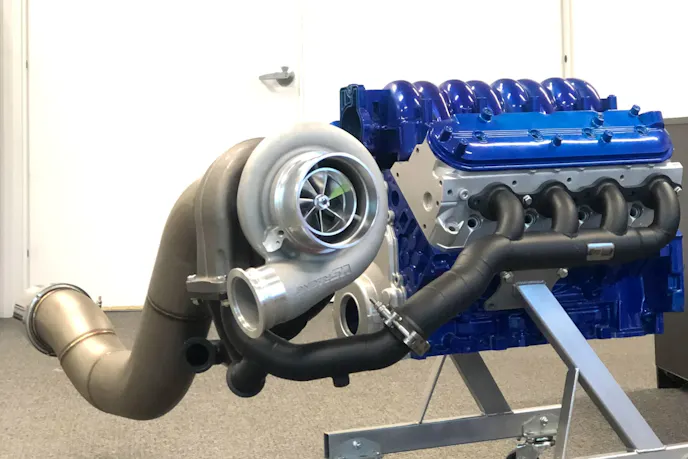
While turbochargers tend to be the most efficient at producing power, which is why they’re popular among OEM manufacturers and aftermarket tuners, there are drawbacks to the system. Firstly, unlike a supercharger, which has its own contained oil system that needs minimal maintenance, a turbocharger needs oil fed from the engine and also a drain back to the oil pan. Additionally, packaging can be challenging since the exhaust system in the engine bay now needs to be reconfigured to accommodate the turbo(s).
Choosing the Right Power Adder
At the end of the day, the best power adder comes down to how you use your car, what your engine can handle, and how much you’re willing to invest. Nitrous remains the budget-friendly shortcut to impressive numbers, while superchargers deliver dependable, repeatable power with straightforward maintenance. Turbos offer unmatched efficiency and horsepower potential, but demand careful planning and precise installation.
Each system has its strengths and compromises, and understanding those differences ensures you pick the right solution for your goals. Whether that’s quicker ETs at the strip, stronger midrange on the street, or pushing the limits of a full-tilt race build. With the right combination of parts, tuning, and mechanical awareness, any of these power adders can transform your engine into a far more capable performer.
You might also like
Classic Style, Modern Control: Art Morrison’s GT Sport Chassis For Early Chevys
Art Morrison's GT Sport chassis transforms the timeless 1949-54 Chevrolet into a serious restomod performer.