


Unless you are building the ultimate sleeper, a cool-sounding exhaust is one of the signature traits of a street-muscle machine. An internal combustion engine is the literal heartbeat of any muscle car (or truck) and with that, comes heat. A muffler is designed to control the engine’s exhaust note, but the opposing side of that coin is additional heat emitted through the muffler housing. Design Engineering’s Muffler Shield kit is engineered to cut down the amount of heat expelled under the vehicle from your ride’s sweet-sounding mufflers. This all-in-one kit helps contain unwanted heat, which is then directed down through the exhaust and out from under the vehicle.

Our 1964 Chevelle already had a great-sounding Flowmaster exhaust, but residing in Arizona meant enough heat was already trying to find its way into the cabin of our cruiser. The air conditioning did a pretty good job of cooling down the cabin, but after driving the car in traffic, those mufflers would heat the metal floor and you could feel the heat emanating up through them.

We decided to go with DEI’s Muffler Shield to try and limit the amount of heat hiding under the car with every stoplight. Our efforts were rewarded with a noticeable drop in temperature at the floorboards. The company has spent decades creating products to combat unwanted heat or noise. For even more heat control, enthusiasts can go all-in and wrap the entire exhaust, or shield the entire underside of the vehicle with DEI’s heat-fighting products.
Installing DEI’s Muffler Shield
Our exhaust was already installed, but this product is simple to install whether the muffler is on the workbench or under the vehicle. The hardest part of our installation was gaining access to our mufflers since they reside under the vehicle. That task was quickly achieved thanks to our Quick Jack, which made short work of lifting our 4,000-pound A-body.
The Muffler Shield material can take up to 1200 degrees F, so it’s pretty robust. Also, there are no adhesives used so there’s no off-gassing or smoking when the exhaust gets up to temperature. — Steve Garrett, DEI
With the car in the air, we could easily access our mufflers. Each Muffler Shield kit is designed to cover one muffler and since we have dual mufflers, we needed two kits. Each kit contains a 42×24-inch sheet of 10-mil dimpled aluminum and a 1/8-inch-thick needle glass insulator. Both materials can easily be trimmed to fit most mufflers. There are also four locking ties to keep the Muffler Shield in place and a free locking tie tool to cinch everything down once installed.
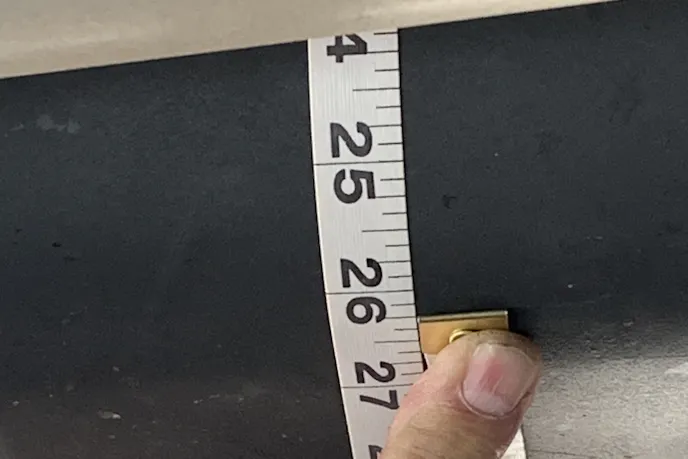
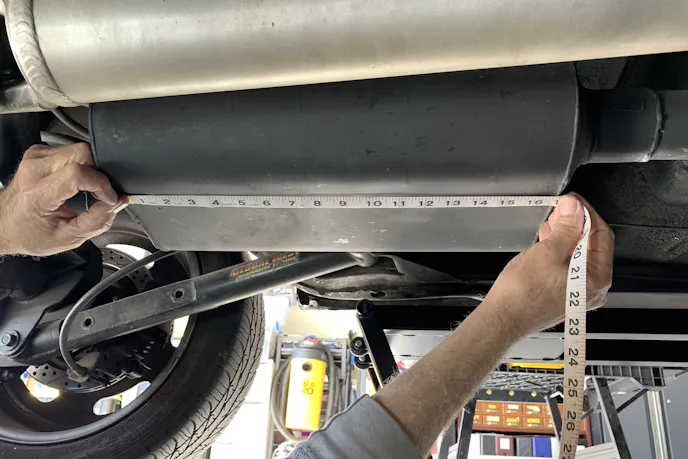
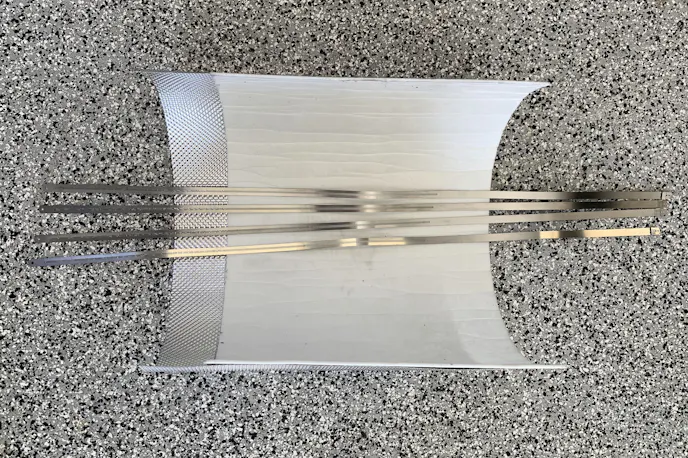
The first step is measuring the muffler so you can cut the materials to size. Since this is a complete wrap of the muffler, we measured the circumference, as well as the length of the muffler. Then it was off to the workbench to cut the material to size. The glass matting is easily cut with a pair of scissors while the dimpled aluminum sheet is pretty stout but still easily trimmed with shears. Be careful when cutting the material though, as there could be sharp edges. We suggest wearing gloves, just to be safe. And, if your vehicle has two mufflers and they are both the same size, we recommend cutting both sets of Muffler Shield. So long as you don’t forget and leave one Muffler Shield on the workbench, this means you only have to crawl back under the vehicle one more time to finish the installation.
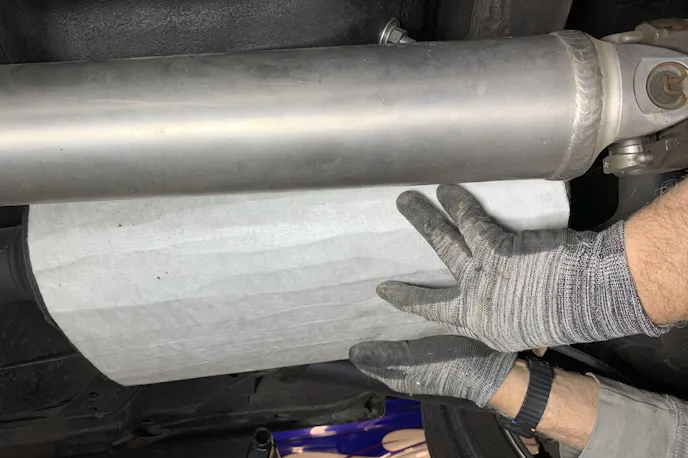
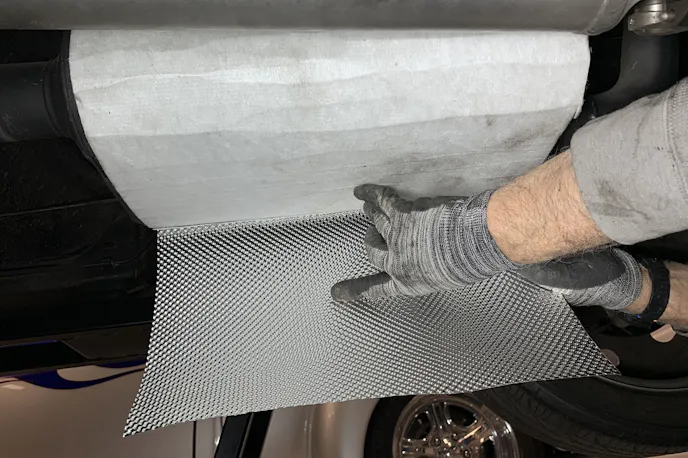
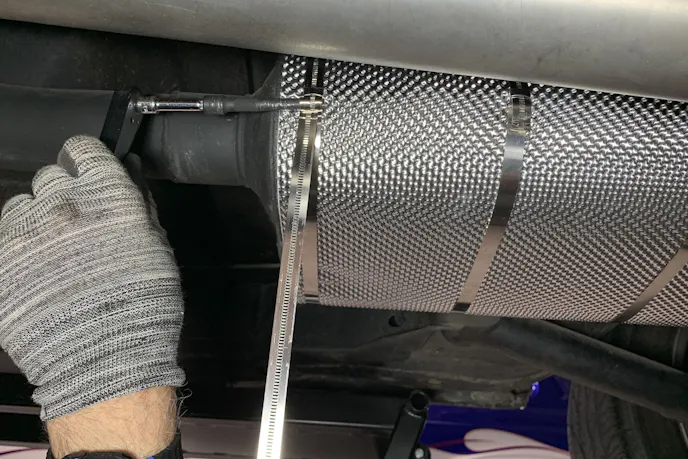
With our materials cut to the necessary size, we slid back under the car. The first step is to install the glass mat insulator, wrapping it around the entire body of the muffler. The dimpled aluminum sheet is then applied around the muffler and glass matting. This adds an additional level of controlling unwanted heat and helps protect the glass mat from the elements as you’re driving the vehicle. There are four straps included in the kit. We used all of them to help hold both the aluminum and glass mat sheets firmly to the muffler. The supplied tool made tightening the straps easy. We just needed to supply a 1/4-inch ratchet to operate the tool.
The Benefit Of A Cooler Cabin
Once we had DEI’s Muffler Shield installed on both mufflers, we quickly reached for the keys to see if there was any quantifiable benefit of using the product on our Chevelle. Any reason to put some seat time in a mid-‘60s A-body is a good reason, right?
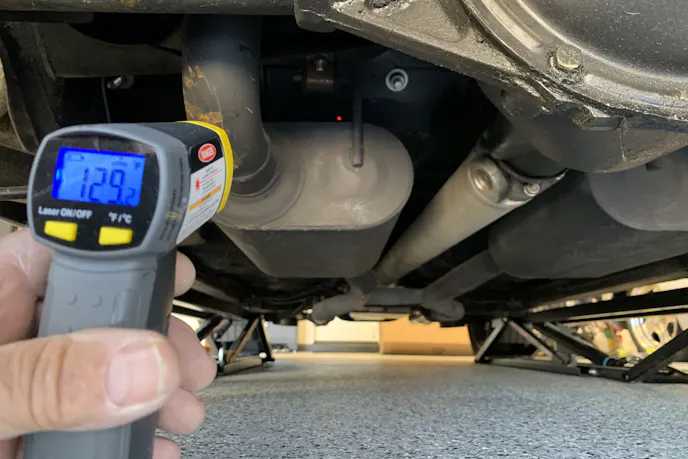
Before installing the product, we ran the car long enough to allow heat from the mufflers to soak into the Chevelle’s metal floorboards. When all was said and done, our trusty infrared temperature gun registered 129 degrees. Keep in mind that we did this install early in March. Had this test been done during a typical mid-summer in Arizona, the surface of the road could have easily reached that temperature, making the amount of heat buildup under the vehicle even worse.

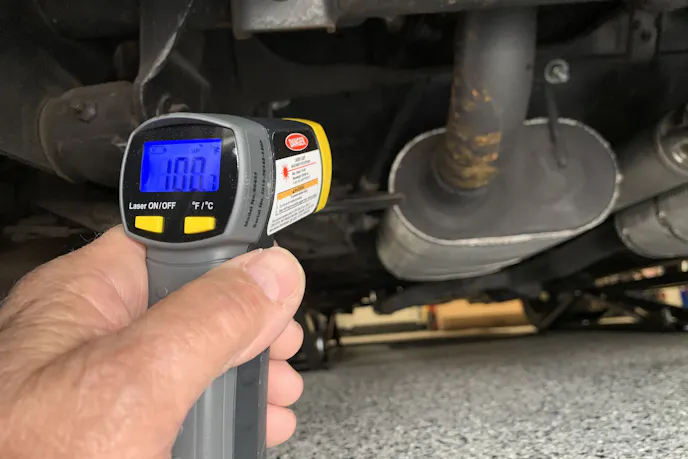
We were pleasantly surprised to see floorboard temps drop almost 30 degrees with the Muffler Shield installed. Our temp gun consistently registered around 100 degrees, a significant drop in temperature, which will also limit the amount of heat able to encroach into the cabin area of our car. This not only helps perceived heat but also helps the car’s air conditioning to better control the cabin temperatures throughout. For even more heat control, DEI says wrapping the pipes as well can be a huge help — especially upstream of the mufflers. This additional layer of protection will hold about 50 percent of the heat in the pipe, which further helps keep heat from radiating into the body and floors.
We know that heat rises, and with improved under-car heat control, the cockpit is better shielded from unwanted heat. The cooler cabin means Arizona’s stop-and-go traffic isn’t as daunting for those riding in the Chevelle. Now, if we wish to exercise the option to fully enjoy the sun’s warmth from above, we can do so by simply dropping our car’s convertible top.
You might also like
Classic Style, Modern Control: Art Morrison’s GT Sport Chassis For Early Chevys
Art Morrison's GT Sport chassis transforms the timeless 1949-54 Chevrolet into a serious restomod performer.