

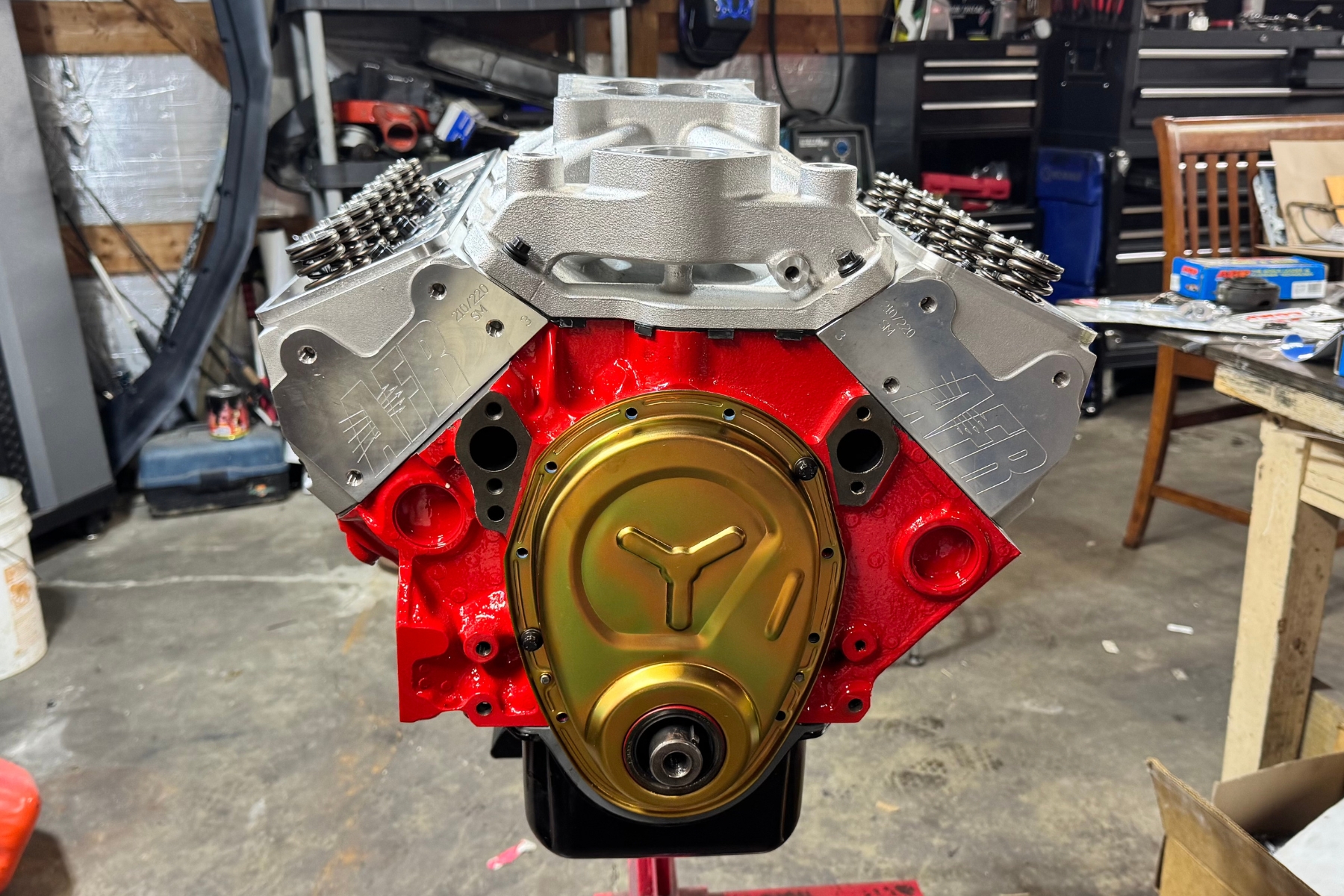
With the cam degreeing complete and the oiling system secured in earlier stages of Project Mighty Mouse, the next logical step in bringing our 327 ci engine to life was finishing the top end. The short-block was ready, the rotating assembly was verified, and the foundation had already proven itself worthy of the higher rpm target we set for this build. Now, it was time to provide our engine with SBC cylinder heads that have the airflow and stability it needs to perform like a true high-winding small block.
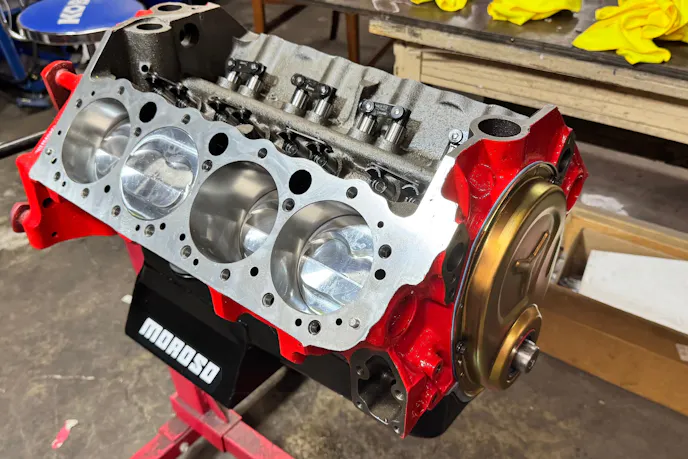
To accomplish that, we turned to Air Flow Research. Its 210 cc Competition SBC cylinder heads, improved valvetrain parts, and CNC port-matched 4810 Eliminator intake manifold provide the airflow, strength, and reliability needed for the high rpm this project aims for. Each part of this package supports the discipline and character of a small displacement engine that relies on strong breathing and a sharp response to generate power.
SBC Cylinder Heads That Fit The Build
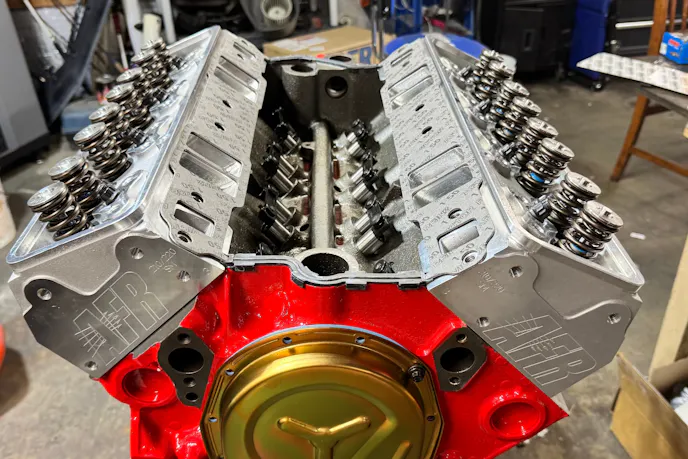
AFR’s 210cc Competition heads offered the port shape, airflow capability, and construction quality our 327 required. The heads are cast from A356 aluminum and feature a .750-inch deck for improved strength under high cylinder pressure. Full CNC machining is applied to the intake runners, exhaust runners, and combustion chambers. That level of precision helps maintain consistent flow across all eight cylinders and improves the combustion quality at higher engine speeds.
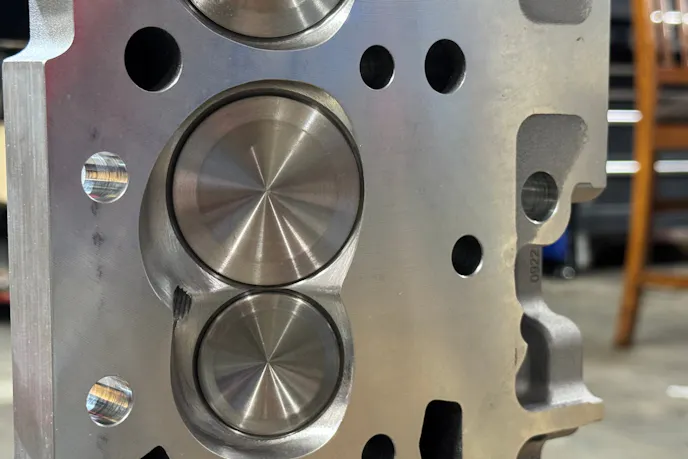
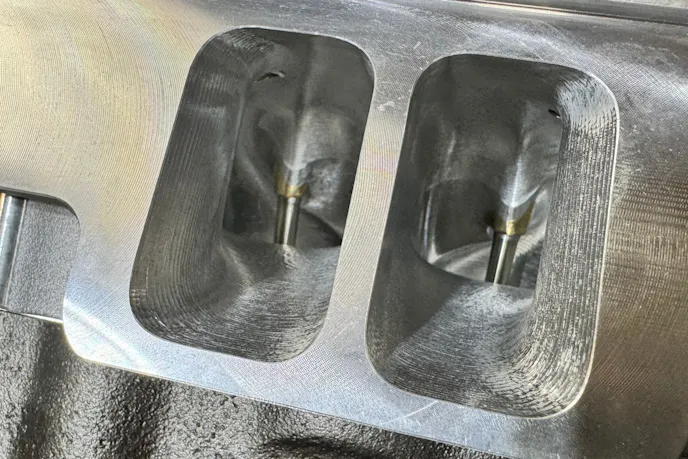
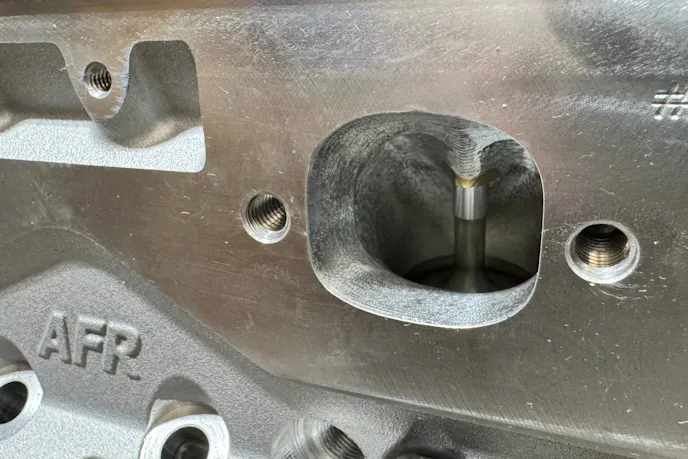
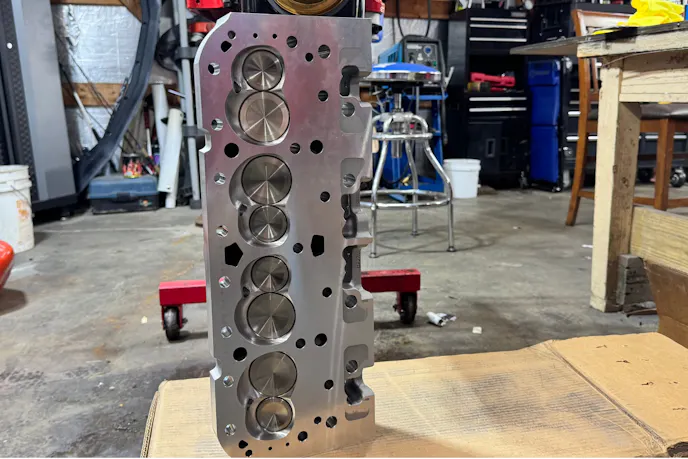
The 210 cc intake runner volume fits the behavior of a smaller displacement, higher rpm engine. AFR recommends these heads for combinations that operate around 6,500 to 6,800 rpm, and that aligns closely with the Cam Motion camshaft profile chosen for Project Mighty Mouse. The fully CNC-machined 65 cc chambers reduce hot spots, increase burn efficiency, and support the compression ratio we targeted for the build. With a 4.060-inch bore, the heads’ minimum bore requirement of 4.000 inches is met cleanly.
This combination of engineering and manufacturing quality is why AFR remains one of the most respected names in SBC cylinder heads.
Flow Data That Supports A High RPM Powerband
The flow characteristics of the 210 cc Competition head are well-suited for a 327 ci engine with an emphasis on rpm. AFR’s published numbers show 257 cfm at .400 lift, 296 cfm at .500, and 322 cfm at .650 on the intake side. Exhaust flow reaches 214 cfm at .400 and 237 cfm at .650. These numbers indicate that the head continues to deliver airflow as lift increases, which is important for an engine with fast piston speed and a camshaft designed to take advantage of that airflow.
Strong flow at higher lift points supports efficient cylinder filling and excellent scavenging. For a smaller engine like ours, this is critical. The 327 ci platform relies heavily on airflow velocity and consistency to make clean, repeatable power in the upper range of the tachometer.
Valvetrain Components Built For 7000 To 7200 RPM
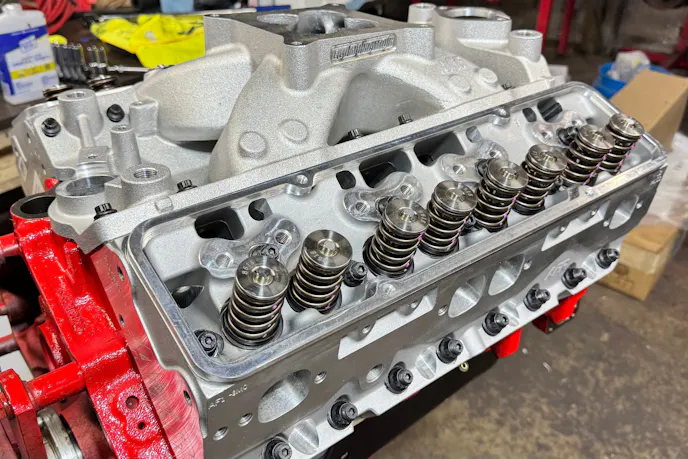
AFR equipped our SBC cylinder heads with a spring and retainer package specifically matched to the demands of a high-RPM hydraulic roller camshaft. The AFR 8019 springs, identified by their red and pink stripe, were selected to complement our valve train geometry and camshaft lift profile.
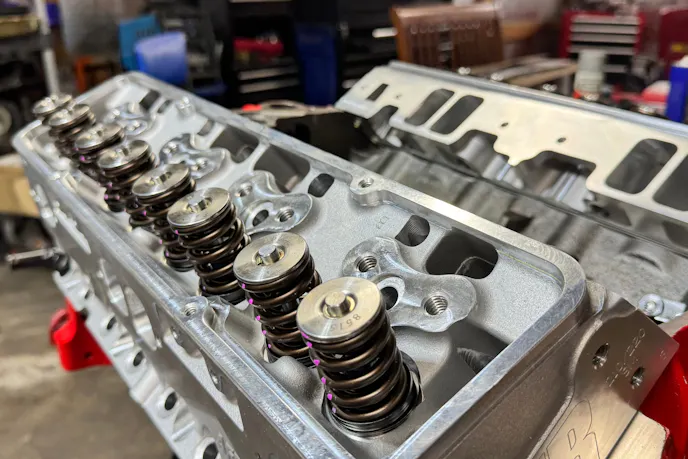
These springs measure 1.270 inches in outer diameter and .645 inches in inner diameter. Seat pressure is 155 pounds at a 1.810-inch installed height, and open pressure is 448 pounds at 1.160 inches. Coil bind occurs at 1.080 inches, the spring rate is 450 pounds per inch, and the maximum gross lift is .650 inches. AFR rates this spring package for 7,000 to 7,200 rpm, which places it exactly in the operating range targeted for Project Mighty Mouse.
Titanium retainers help reduce mass and allow the springs to maintain accurate control at high rpm. On a 327 ci engine, where piston speed increases quickly as rpm climbs, stable valvetrain behavior is essential for both performance and reliability. With these components installed, the top end is prepared to support the airflow potential of the AFR heads.
Cometic MLS Gaskets Lay The Foundation For Sealing
Assembly began with sealing the heads to the block using Cometic MLS gaskets. The multi-layer steel design allows these gaskets to keep a tight seal even when they heat up and when the aluminum heads and cast iron block expand at different rates. The embossed stainless layers compress and conform under torque, creating a reliable and repeatable seal.
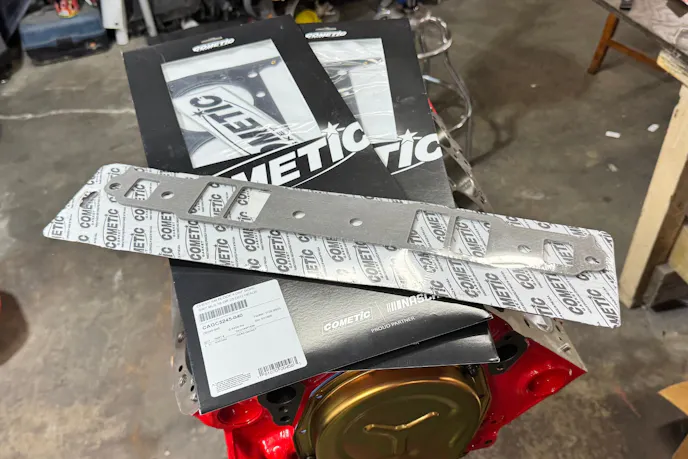
For our build, we used Cometic P/N C5245-040. This gasket has a compressed thickness of .040 inches and is designed for a 4.060-inch bore size, which matches the dimensions of our 327 ci combination. It also helped maintain the compression ratio we targeted. Once the MLS gaskets were installed, we set the AFR heads in place, forming the base of the engine’s top end.
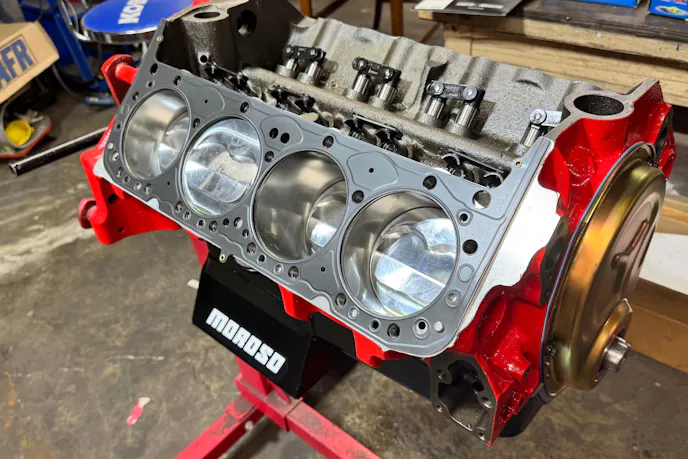
Securing The Cylinder Heads With ARP Studs
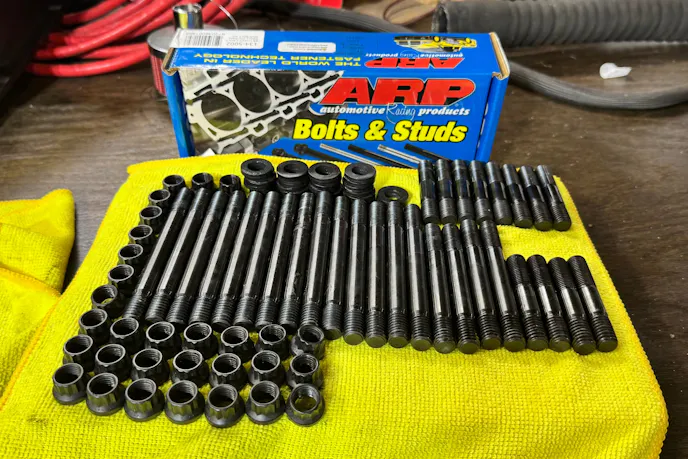
With the heads positioned, we secured them using AFR’s recommended ARP head stud kit, P/N 234-4301. Studs were selected instead of bolts because they provide a more consistent clamping force. When torque is applied, the nut rotates while the stud remains stationary in the block. This reduces thread wear and eliminates the twisting forces that can influence torque readings.
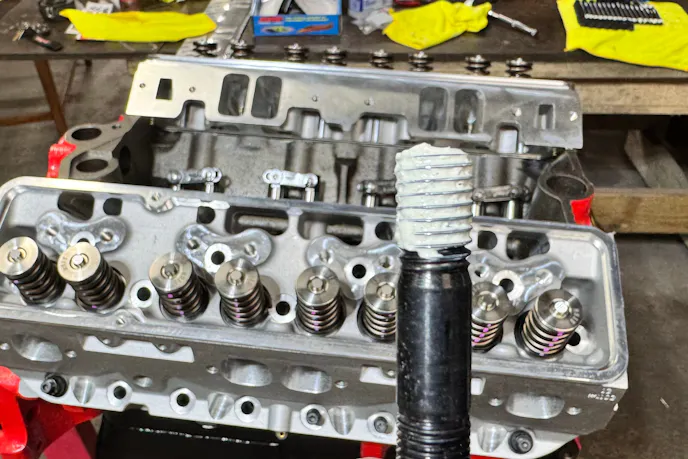
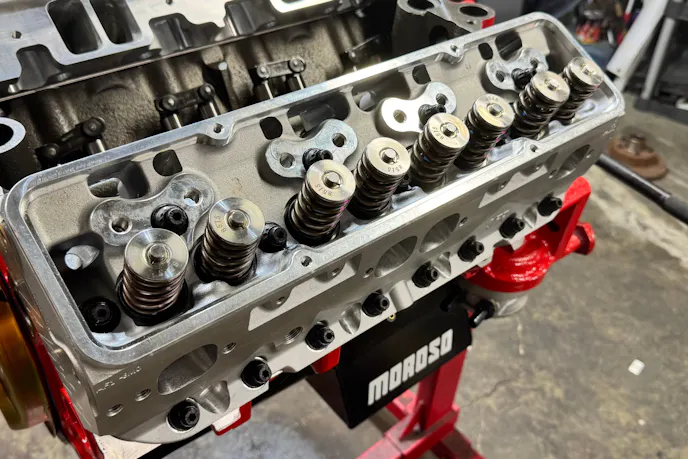
For an engine experiencing high cylinder pressure changes at elevated rpm, consistent clamping contributes directly to long-term durability. Studs also help align the heads during installation, making assembly cleaner and more accurate. Our use of ARP hardware aligns with the rest of the build’s philosophy: rely on proven components that support reliability under load.
Intake Gaskets, RTV, And Manifold Installation
Once the heads were torqued, we installed Cometic intake gaskets, P/N C15614-059. These gaskets have ports measuring 1.310 by 2.210 inches, which match the AFR intake port openings and the 4810 Eliminator manifold that AFR has ported to fit our heads. Matching gasket size to port shape prevents material from intruding into the airflow path, which is especially important for a smaller engine that relies on velocity.
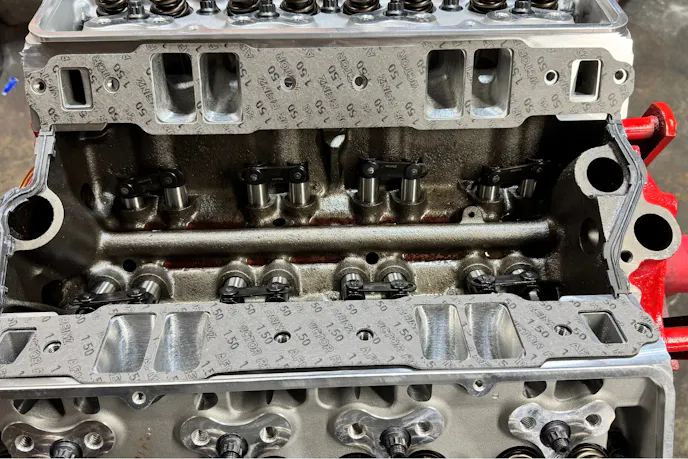
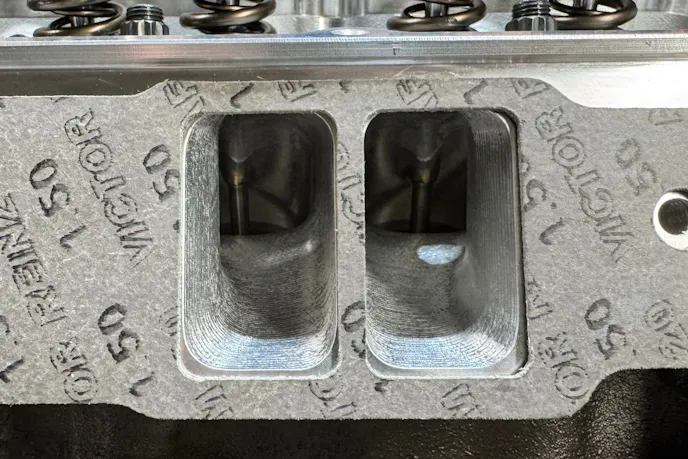
RTV was applied to the China walls, the preferred method for sealing the front and rear surfaces of a small-block Chevy intake. RTV provides a flexible seal that can handle the expansion and contraction of the manifold during heat cycles.
With the RTV set, we installed AFR’s Eliminator single plane intake, P/N 4810PM. AFR’s CNC port matching eliminates any steps between the manifold and heads, preserving the airflow signal and maintaining velocity throughout the intake path. For a high-rpm 327, the intake helps maintain consistency in how the cylinders fill under load.
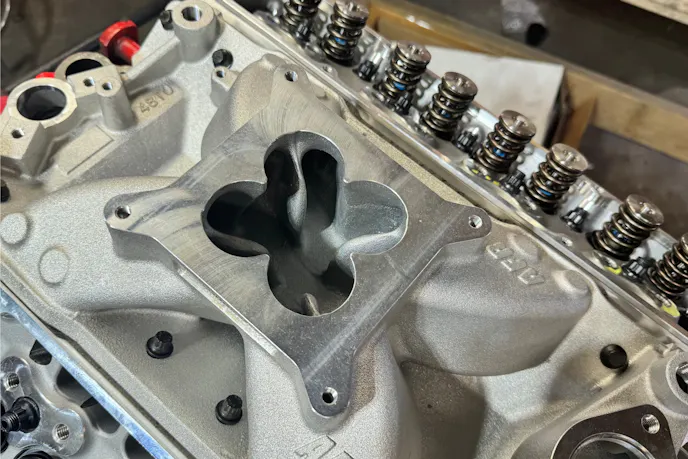
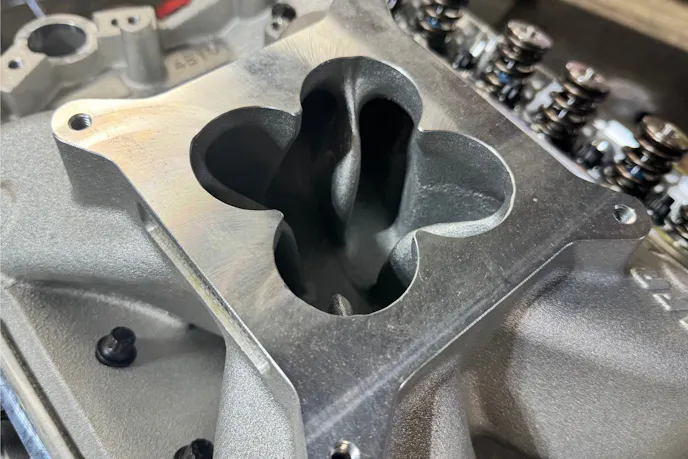
We secured the manifold with ARP’s flanged 12-point chromoly bolts, P/N 534-9701, keeping the hardware consistent across the top end. The intake itself is AFR’s new 4810 Eliminator SBC aluminum single-plane manifold, P/N 4810PM, designed to support high-RPM small-block combinations. The 4810 features a 3000–7500 RPM operating range, a 4150 carburetor flange, cast-in nitrous bosses, and a 4.580-inch carburetor pad height. It also includes dual distributor clamp hold-downs and both front and rear water outlets for added cooling flexibility. While AFR originally CNC ported the 4810 to its 195cc street heads, our manifold was CNC ported by AFR specifically to our 210cc Competition heads, ensuring a clean transition and uninterrupted airflow path. Like AFR’s cylinder heads, the 4810 Eliminator intake is cast and machined entirely in the United States, reinforcing the overall quality and consistency of the combination.
A Modern Top End For A Classic Small Block
With AFR’s 210 cc Competition heads, a valvetrain made for high rpm, Cometic MLS gaskets, a properly matched intake manifold, and ARP hardware put in place, Project Mighty Mouse now has a top end that fits the style and performance of the 327. The combination supports the airflow, stability, and reliability needed to produce the crisp, responsive character that has defined this engine family for decades.
In the next installment, we will move into bolting up the accessories and finalizing the external components that complete the engine assembly. After that, our final pre-dyno chapter will focus on measuring for the correct pushrod length and installing the rocker arms. Once the valvetrain geometry is verified, the 327 ci will be ready for its first fire-up and dyno session.
Project Mighty Mouse is getting close to proving what a well-executed small-journal small block can do, and the next steps will bring us even closer to hearing this engine come to life.
You might also like
Classic Style, Modern Control: Art Morrison’s GT Sport Chassis For Early Chevys
Art Morrison's GT Sport chassis transforms the timeless 1949-54 Chevrolet into a serious restomod performer.