
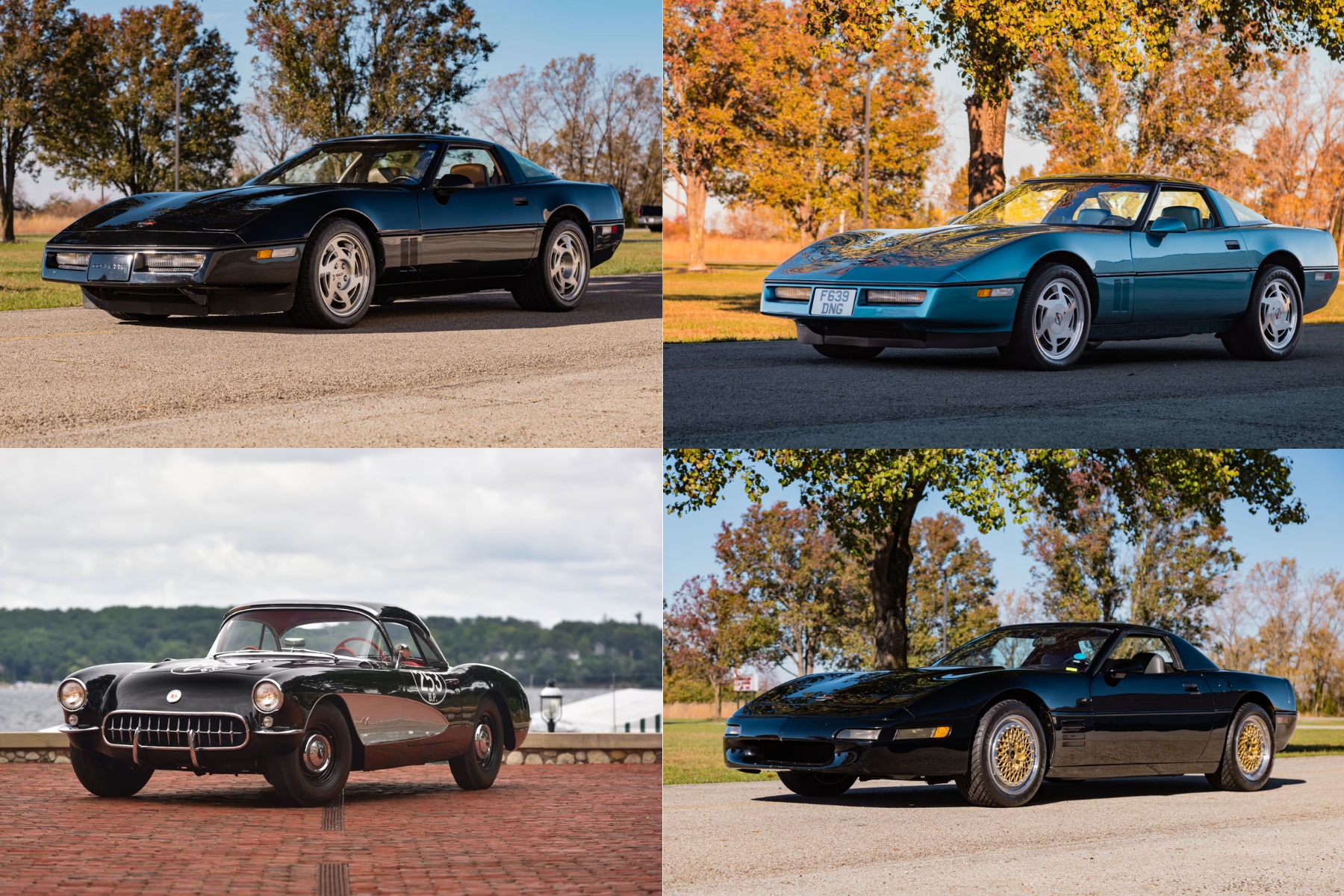
When Mecum Auctions returns to Kissimmee, a small group of Corvettes that rarely surface in public, let alone within the same sale, will cross the block. Spanning nearly four decades of development, these cars represent critical moments in Corvette history, from early factory-backed competition efforts to experimental engineering vehicles and landmark production models.
The earliest of the group, a 1957 Airbox Corvette, is scheduled to sell on Friday, January 16, while the remaining three cars will be offered on Saturday, January 17. Seen together, they provide a rare look at how Chevrolet tested ideas, solved problems, and refined performance long before those decisions reached showroom floors.
Rather than focusing on cosmetic rarity or option lists alone, each of these Corvettes reflects a specific purpose within the brand’s performance timeline, making their appearance at Mecum a notable moment for collectors and enthusiasts alike.
1957 Chevrolet Corvette Airbox
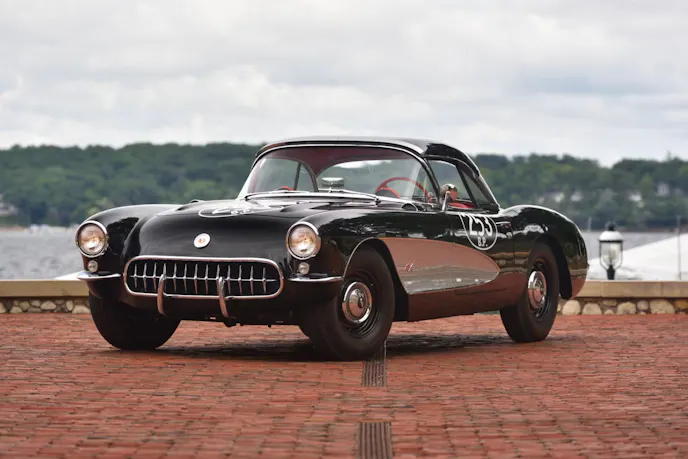
The earliest known Airbox Corvette is one of the most important competition Corvettes ever built. One of just 43 examples produced with the RPO 579D Airbox option, it represents Chevrolet’s first serious effort to support privateer racing through factory engineering.
The Airbox system fed fresh air directly into the fuel-injection unit via a fender-mounted intake, improving airflow and consistency under racing conditions. Power came from the fuel-injected 283 cubic-inch V-8 rated at 283 horsepower, paired with one of the earliest four-speed manual transmissions fitted to a Corvette.
This car also received the RPO 684 heavy-duty racing suspension, which included upgraded springs and shocks, a heavier front stabilizer bar, metallic brake linings, finned drum brakes, and fresh-air brake ducting. Raced in 1957 and 1958 by Bill Howe, this example carries legitimate competition history rather than theoretical performance intent.
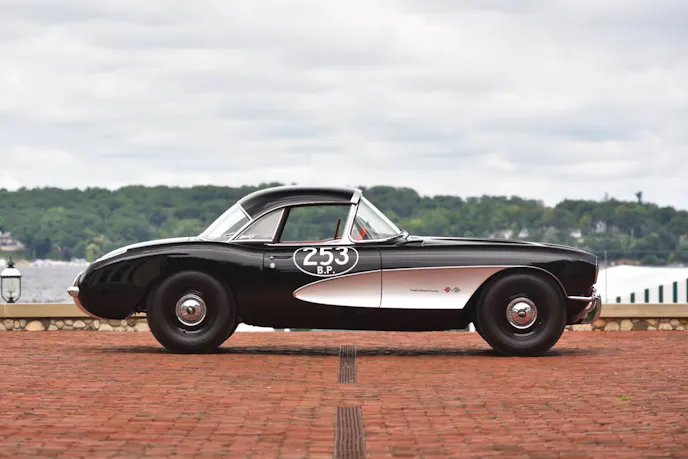
Finished in Onyx Black with Inca Silver coves and a red interior, the car has undergone an extensive restoration that preserves its original configuration, including the column-mounted 8,000 RPM tachometer, auxiliary hardtop, and radio delete. Corvette first established its performance credibility on the track.
1993 CERV IVb
The CERV IVb exists because Corvette engineers refused to let the program stagnate. Built in 1993 as an experimental development vehicle, it served as a proof-of-concept for what would eventually become the C5 Corvette.
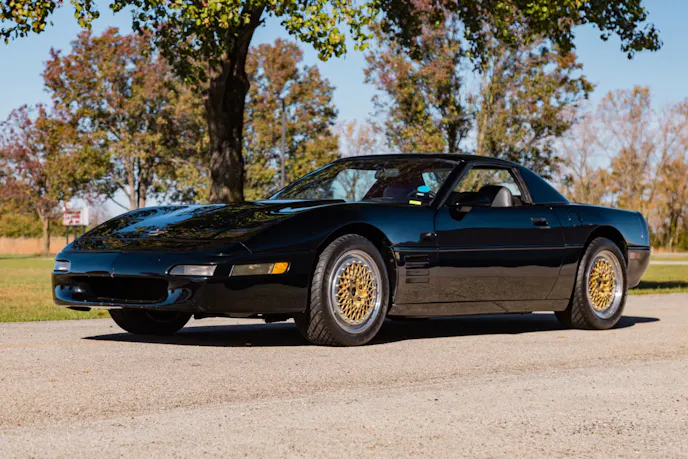
Commissioned quietly and kept hidden from GM executives, CERV IVb allowed engineers to test critical design changes without risking project cancellation. Among its most visible updates is a C5-style hood that leaves the fenders and headlights fixed in place, eliminating the heavy clamshell design used on the C4.
The car also features an experimental side-mounted fuel door developed in response to EPA regulations, along with a prototype trunk layout used to evaluate future convertible designs. Inside, the interior was modified with C5-style seats and door panels, while the exterior received a custom front fascia with a large central opening.
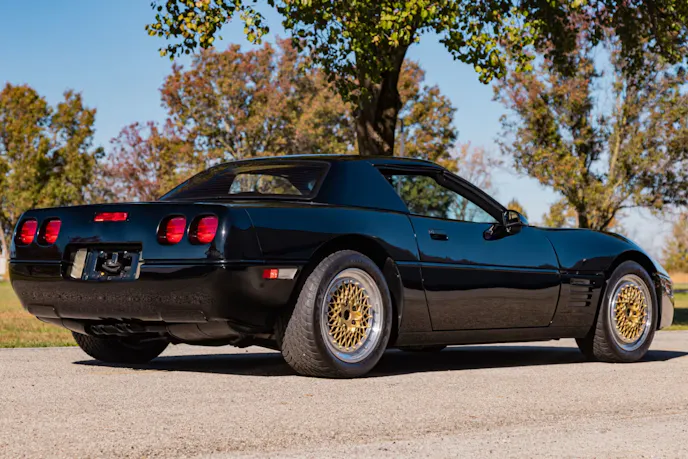
Power comes from an LT1 5.7-liter V-8 backed by a six-speed manual transmission and FX3 Selective Ride Control. Documentation remains intact, including GM Proving Grounds and Design Study C5Y002 windshield stickers and a Chevrolet Engineering record book detailing the vehicle’s modifications. Acquired by the Yager family in 2009, CERV IVb offers a rare look at Corvette development in motion.
1990 Chevrolet Corvette ZR-1
By the time the ZR-1 reached production in 1990, Corvette’s engineering had shifted from experimentation to execution. The ZR-1 was designed to elevate the Corvette nameplate on a global scale, combining advanced engine technology with chassis refinement.
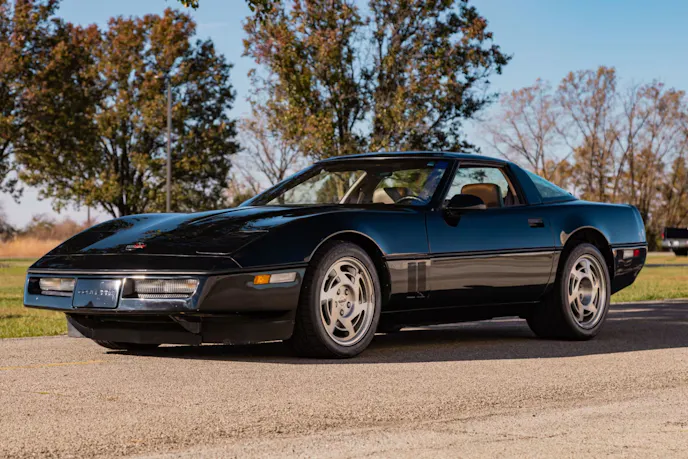
This example, one of 3,032 produced for the model year, was delivered new to the Warren Tech Center, underscoring its importance within General Motors. At its core is the LT5 5.7-liter DOHC 32-valve V-8, rated at 375 horsepower and paired with a six-speed manual transmission.
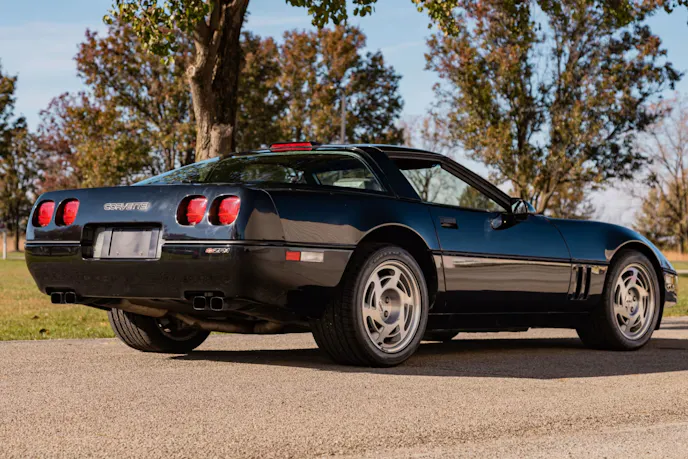
Unique body panels widened the rear of the car to accommodate massive P315 rear tires, while the Z51 Performance Handling Package and FX3 Selective Ride Control provided improved balance, cooling, and braking. Finished in black over a gray leather interior, this ZR-1 reflects the moment when Corvette moved from domestic performance leader to legitimate world-class contender.
1989 ZR-1 Prototype
Before the ZR-1 became a production benchmark, it existed as a tightly controlled engineering experiment. In 1989, Chevrolet built just 84 ZR-1 Corvettes for mechanical evaluation, testing, and media preview, none of which were originally sold to the public.
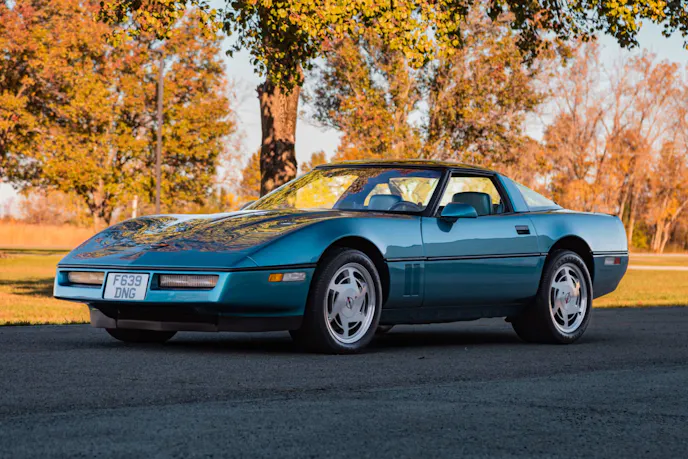
This particular prototype is among the rarest, finished in Medium Blue Metallic with a matching blue interior, the only ZR-1 prototype configured this way. Discovered in England by Mike Yager in the mid-1990s, it was later restored by Mid America Motorworks over eight years and remains documented with its ZR-1-specific VIN and vehicle specification sheets.
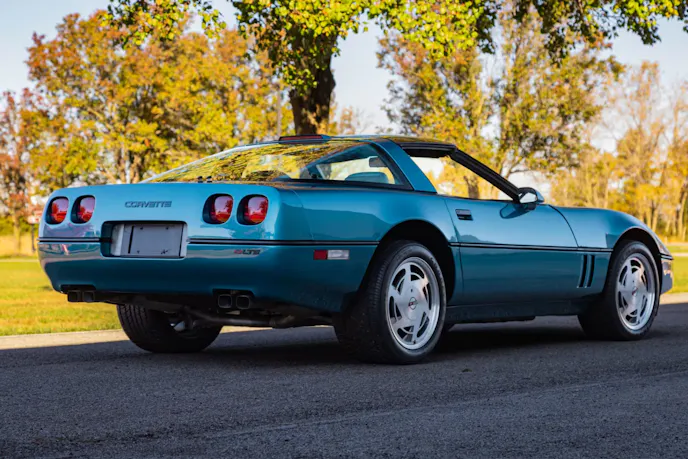
Mechanically, it mirrors the production ZR-1 with its LT5 engine, six-speed transmission, Z51 handling package, FX3 suspension, and unique ZR-1 wheels. What separates it is its role in shaping the final product rather than representing it.
A Clear Line From Experiment To Icon
Looked at together, these Corvettes show how Chevrolet built its performance playbook over time. Each one reflects a moment when engineers were solving real problems, whether that meant supporting racers, testing new layouts, or proving an idea was ready for production.
From early competition hardware to secret development cars and finally to production ZR-1s, the progression feels deliberate. You can see where ideas were tried, refined, and carried forward. It’s a reminder that Corvette performance didn’t happen overnight; it was earned through years of testing, risk, and evolution.
You might also like
Classic Style, Modern Control: Art Morrison’s GT Sport Chassis For Early Chevys
Art Morrison's GT Sport chassis transforms the timeless 1949-54 Chevrolet into a serious restomod performer.